Uncategorized
Connecting with ASD Patrons
The following information is taken from: People with Autism Spectrum Disorders (ASD): What You Need to Know Library Accessibility Tip Sheet 6
A patron with ASD may not be verbal or may talk at you rather than converse. This patron may repeat what you say, be too loud, interrupt others, not understand figures of speech or jokes, and/or be unable to follow multipart instructions. A person with ASD may be unusually sensitive to smells, ambient noise, flickering lights, and certain textures. Many persons with ASD lack the ability to read body language or other social cues. Some persons are not aware of socially appropriate behaviors—not understanding the rules of social distance, appropriate touch, turn taking, and eye contact. These impairments create a need for control and predictability in the environment. Accommodating a person with ASD often involves facilitating and directing interactions in order to reduce the risk of meltdown and disruption.
Following these guidelines will make the library visit comfortable and minimize frustration for persons with ASD. However, if a patron with ASD begins to tantrum (have a meltdown) or becomes verbally or physically threatening, it is OK to ask this person to leave (or have this person removed) until calm. In extreme cases, if the person with ASD represents a threat to himself or others, it is appropriate to involve security personnel or the police. Ensure that law enforcement personnel understand that this person has a developmental disability and is not a criminal.
Patrons with ASD are members of the community and are able to participate in many library programs when given the appropriate supports. The time that you spend creating a comfortable environment will encourage all families to visit their local library.
Tips—General
- Communicate directly with the patron when possible, not the caregiver.
- Determine the preferred communication style (verbal, sign language, written notes, a communication board), and defer to that preference.
- Keep your language simple and concrete. Avoid idioms and multipart directions
- Rather than telling a patron with ASD what not to do, instead be positive, advising the patron about acceptable behavior.
- Be predictable. Describe your present and upcoming actions.
- Give five- or ten-minute warnings before transitions (for example, the end of computer time).
- Do not insist on adherence to social norms, such as eye contact.
- Be flexible. Allow some noisemaking, gum chewing, and sitting where comfortable to encourage participation if these things help the person with ASD organize him- or herself and participate.
- Bend circulation policies when possible. (For example, allow multiple renewals of favorite titles.)
- If waiting in line is a problem for a person with ASD, assist the person with ASD as soon as feasible. Do this in a discreet manner; do not to draw attention to the patron.
- Minimize sensory stimulation. For example, turn off some fluorescent lights and remove distracting objects from program rooms.
- Provide quiet, private work areas.
- Explain environmental changes, including furniture or staff changes, to patrons.
- Ask patrons what disturbs the library environment, and avoid or alter these environmental stresses.
- Advise patrons with ASD of days and times when noise/crowding is lower and staff can provide greater personal assistance.
- Have a quiet place where someone can go to compose him- or herself if necessary.
Tips—Class Visits or Programs
- Unless told otherwise, assume that a child with ASD is functioning on the same age/grade level as peers.
- Begin with an explanation of the visit or program with a visual schedule. Refer to that schedule when transitioning to a new activity.
- Don’t insist that the child with ASD join in everything, but be prepared to adapt activities or crafts so children with ASD can participate.
Assistive Technology
- Picture schedules of library events or due dates of materials.
- Visual timers where needed.
- Touch screens
- Alpha smart (a lightweight, portable tool which helps persons who have difficulty with spelling and grammar get it right)
- Fidgets (small manipulatives like a soft ball or anything that fits safely and comfortably in the hand)
- Natural light or full-spectrum florescent lighting
What people have said about the Targeting Autism Forum

Below is a small sample of the comments received by the University of Illinois Research Office from a survey of Targeting Autism forum attendees:
“All the formal presentations were fantastic, inspiring, enlightening, engaging–I can’t say enough! But I also want to note that the informal in-between times, chatting with people at our tables, was extremely valuable in terms of sharing ideas and inspiration, making connections and discovering new resources. Thanks for getting so many great brains in one place!”
“…Such a wealth of information and ideas is an amazing thing to be a part of to help me grow personally and professionally in the library system…”
“…I am now more likely to take proactive steps on behalf of our library serving people on the spectrum. It was especially inspirational meeting people on the spectrum…”
“The forum in March 2016 was very instrumental to not just myself but several other southern Illinois librarians who attended. The smaller populations and budgets of our libraries make it more difficult to provide services and information to our patrons. The March 2016 Forum demonstrated that every library can be autism aware and proactibely work toward making its staff and programs ASD friendly. The awareness that the southern Illinois librarians gained from the forum is just the beginning of a change in the way we understand and provide services for our ASD patrons.”
“Even though I am the parent of two teens with ASD and a former Special Ed teacher, I struggled with knowing what accommodations were needed and how to implement them. Some of this struggle can be attributed to lack of understanding from my superiors. So, the fact that a forum on just this one topic was offered combined with my interest and excitement afterwards has changed the level of resistance. Now I have great examples of what is needed and can be done in a library .”
“I see the library as a great community resource to offer services in a neutral, non-stigmatized setting. A place for integrated activities to build awareness and acceptance of people of all abilities.”
“I think it’s a wonderful opportunity for people on the spectrum, their families and the entire community! It’s something that needed to have happened a very long time ago. I’m just pleased to see that it is finally happening!”
“…It’s [the forum] expanded the idea of what kind of resource the library can be for families living with autism, and helped me appreciate the importance of serving patrons throughout the transitions in their lives, from child to teen to adult.”
“It [the forum] has helped me realize the value of our service to individuals with ASD. Being a relatively small library, we are the only real resource for these individuals and their families.”
“It has helped to reinforce the idea that as a community center the library can be the perfect place to promote awareness, acceptance, inclusion and help to move others to this perspective.”
“The Forum has helped me understand that libraries should be the place where people libing on the spectrum are welcome and able to experience new assistive technology like the apps and social robots.”
“I learned a very valuable life lesson while listening to the speakers. We all have behaviors/characteristics that could be ASD. Most of us learn to compensate for those behaviors. For that one person in sixty-eight who can’t compensate, we as libraries need to step forward, make accommodations, and let our patrons know that libraries are for everyone.”
“The forum helped me to understand the important role of the library as community center for all people. I learned so much and would love for my coworkers to have some of this information to give them a better understanding and awareness of people on the spectrum and their families. I am happy to share with them the things that I have learned, but I feel it would be important for them to have more first-hand experience with people on the spectrum as well as training by professionals in the field.”
“…Libraries can be leaders in the field of inclusion and accessibility for people with ASD. And this forum opened my eyes to what potential impact libraries could have across the state if we unify, are trained, and collaborate. Thank you ISL!”
The next Targeting Autism forum will take place in April 2017. Please send any additional comments and suggestions for next year’s event to Suzanne Schriar.
Targeting Autism Forum Survey Results Reveal the Educational Impact of ASD Self-Advocates
The University of Illinois Springfield’s Survey Research Office conducted a survey of forum participants to find out what content and which speakers made the biggest impact at the March 2016 event. Overwhelmingly, those who attended reported that they gained the most knowledge from self-advocates who spoke at the forum.


The ASD self-advocates who spoke at this year’s forum included (from left to right) Marty Murphy, national public speaker and author; Adria Nassim, consultant, speaker and founder of Adria’s Village; and Alex Dudzenski and Hayden Davis, two middle who, with the help of their teacher, Jan Abernathy, host a YouTube series where they interview guests, showcase pets and share interesting facts about autism.
All presentations from both the 2015 and 2016 Targeting Autism forums can be viewed on the Targeting Autism YouTube channel.
We are seeking suggestions for speakers at the 2017 Targeting Autism forum. If you have ideas, please post a comment to the blog or send an email to Suzanne Schriar
The Institute of Museum and Library Services Awards Illinois State Library $522,871 for Targeting Autism Training and Education Program
The Illinois State Library was awarded a 2016 Institute of Museum and Library Services (IMLS)Laura Bush 21st Century Librarian Grant to administer the development and delivery of an autism spectrum disorder (ASD) training program to improve library service and programs for the ASD community. Targeting Autism: A Comprehensive Training and Education Program for Librarians is a two-year program based in Illinois, where librarians will learn how to design physical spaces, provide necessary accommodations, and create library services and programs that support the resource and recreational needs of individuals with ASD of all ages. The project will provide in-library site visits and consultations to libraries throughout the state to better inform the development of library ASD service plans and will deliver a train-the-trainer, in-person workshop to 1-2 representatives from 50 libraries in Illinois through a partnership with Dominican University. Illinois State Library will also partner with Syracuse University to create a cluster of customized online ASD learning modules for the existing Project ENABLE website that will be available to library professionals nationwide. Finally, Illinois State Library will hold two annual forums for ASD practitioners, multi-type librarians, and other stakeholders to educate, strengthen collaboration, and build on the national network of support for expanding ASD library services.
Face-to-face classes developed at Dominican University, School of Library and Information Science, a Targeting Autism project partner. Leading this effort is Sujin Huggins, Ph.D.
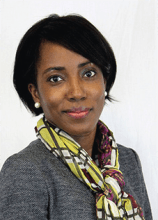
In-library training and consultations conducted by Russ Bonanno, consultant and former Director, The Autism Program of Illinois (TAP)

A cluster of online autism training modules developed for Project ENABLE . Leading this effort is Ruth Small, Ph.D. and the Project ENABLE team at Syracuse University, a Targeting Autism project partner.
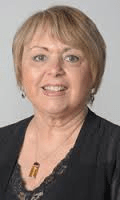
Periodic webinars delivered by the ILEAD USA Team Spectra on technology applications that support individuals with autism.
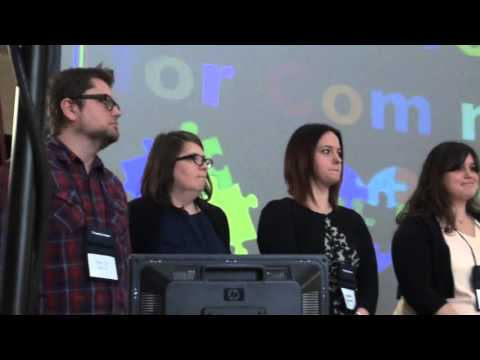
Targeting Autism Forums will continue to be held as part of this new initiative.


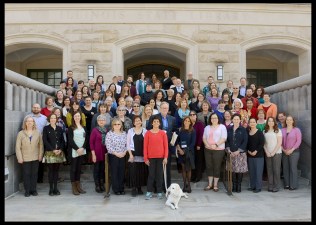
The Office of the Illinois Secretary of State and the Illinois State Library are very grateful to IMLS for providing the Illinois State Library and our project partners with the opportunity and resources to develop a national training model designed to empower librarians to better serve the autism community.
A Footnote from Caren Zucker, co-author, “In a Different Key: The Story of Autism”
From Caren Zucker:
“…I cannot imagine the autism community better served than what you have all done – you are helping to educate a large group of librarians about autism so that they can better help the community. You all then had the insight and kindness (lucky for us) to share our book with them…We hope your insight into the importance of educating others about autism is only the first, and many other educators and librarians will follow…”
The complete book talk was recorded and is available here.

Pictured from right to left: John Donvan, Caren Zucker, Russ Bonanno (moderator)
 targetingautismlibs.com